Advanced Equine Dentistry
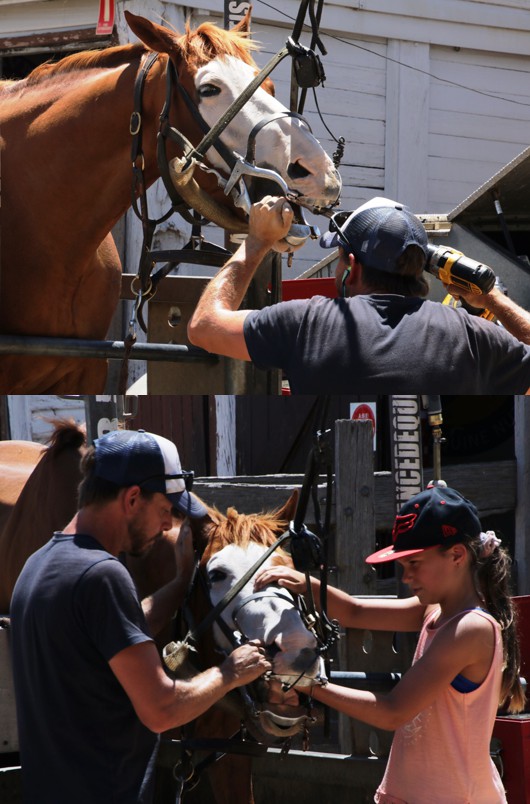
Dental disease in horses is very common and can be complex to treat. As equine dentists, we use the same approach and equipment as your own dentist does with your teeth, with 100% care and professionalism.
- We provide you with easy-to-understand explanations as to why a treatment is necessary
- We'll provide you with options and solutions for treatment
- We offer a no-obligation quote before performing any work.
- We only use equipment and techniques that have been proven to be safe.
What will Advanced Equine Dentistry provide for you?
A friendly, professional equine dental veterinary service, utilising the latest technology and techniques with a sound knowledge of the veterinary needs of the client and the patient.
Why use Advanced Equine Dentistry?
We will provide a thorough examination diagnosis and treatment for all patients. We can provide all dental services including dental imaging (X-rays).
We come to you
We offer full on site veterinary dental services from routine oral exams and treatment right through to complex dental, facial and sinus surgeries.
We come fully equipped
...with digital X-rays, running water, power, lights, digital weigh scales (to accurately weigh your horse)
We provide digital dental records
...for each horse and offer mobile eftpos and credit card facilities.
We work in almost any environment
Our portable dental hospital allows us to treat horses in almost any environment yet we can setup or packup in as little as just 30 seconds
High standards, affordable dentistry
We offer a very high standard of service (because your horses deserve it) at prices that won't break the bank
Advanced Equine Dentistry can provide an improved relationship between horse and rider, removal of dental pain, treatment of disease and infection, improve feed efficiency and a longer healthier outlook for your horse. When only the best care will do.
For riders: whether you are an amateur or professional rider having performance horse problems, we're very experienced in diagnosing and solving head carriage issues.
If your horse, lugs, leans, heavy in hand, resists the contact, snatches grabs, head tosses, these are all conditions we deal with.
We can also diagnose and treat common forms of sinus disease. A snotty nose can be more than a cold: horses sinuses are complex, consisting of six separate compartments on each side of the head. Sinus disease can occur in a number of different ways through multiple causes. Treatment ranges from relatively simple to very complex. Sinus cysts, tooth root abcess and primary sinusitis probably make up the three most common categories of sinus disease.